
For decades, B2B technology marketing revolved around trade shows, conferences, events, and direct sales outreach. If you wanted to get in front of potential buyers, you sponsored a booth, attended industry events, and hoped to start enough conversations to generate pipeline.
Those activities still have tremendous value.
Events remain one of the best ways to build relationships, strengthen partnerships, and engage with prospects face to face. There is simply no substitute for in person networking and the trust that comes from meaningful conversations. Conferences continue to play a critical role in the Microsoft ecosystem, bringing together customers, partners, Microsoft employees, and industry experts to learn, collaborate, and build connections.
But the role of events in the buying process has changed.
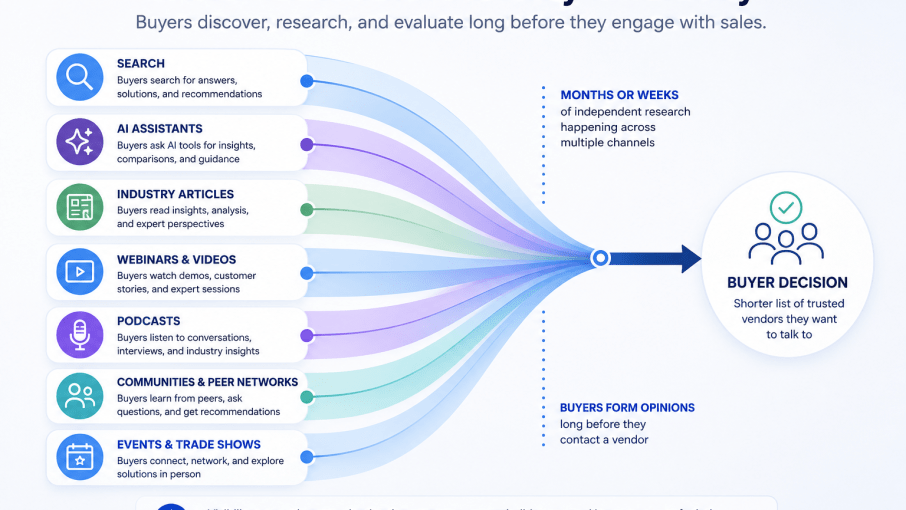
Today’s Microsoft Dynamics 365 and Power Platform buyers are conducting far more research on their own before they ever attend a conference, request a demo, or speak with a vendor. By the time they arrive at an event, many have already identified their challenges, evaluated potential solutions, and developed a shortlist of vendors they want to learn more about.
That shift has elevated the importance of digital marketing and continuous visibility.
If buyers can’t find your company during the research phase, you may never have the opportunity to meet them at an event in the first place.
The New Reality of B2B Software Research
Most software buying journeys now begin online.
When organizations encounter challenges related to finance, supply chain, customer engagement, automation, AI, reporting, security, compliance, or operational efficiency, they don’t immediately register for a conference. They start researching.
They read articles.
They download guides.
They watch webinars.
They listen to podcasts.
They search online.
They ask peers for recommendations.
And increasingly, they turn to AI powered tools for guidance and answers.
By the time many buyers engage with a vendor, they have already consumed a significant amount of information and formed opinions about the solutions they are considering.
This is particularly true in the Microsoft ecosystem, where buyers have access to an enormous amount of information from Microsoft, partners, consultants, independent media organizations, online communities, and software vendors themselves.
As a result, digital visibility has become one of the most important factors influencing who makes it onto a buyer’s shortlist.
Events Still Matter, But They Serve a Different Purpose
This isn’t an argument against conferences, trade shows, or industry events.
In fact, many organizations continue to generate tremendous value from them.
Events are unmatched for networking, relationship building, partner engagement, and accelerating opportunities that are already in motion. They provide a unique environment for conversations that simply can’t happen through digital channels alone.
What has changed is where the buying journey often begins.
Many buyers arrive at events already familiar with the vendors they want to meet. They have read the articles, attended the webinars, watched the videos, listened to the podcasts, and consumed the educational content.
In other words, digital marketing increasingly creates the awareness, while events help strengthen the relationship.
The most effective organizations don’t choose between digital marketing and events. They use both together.
Why Consistency Matters More Than Ever
Many companies approach marketing in bursts.
A new white paper gets published. A webinar is promoted. A few blog posts appear around a product launch. Then activity slows until the next campaign or event.
The challenge is that buyers are researching year round.
A prospect who starts evaluating solutions today has no idea what content your company published six months ago. They only see what is available when they begin their search.
That’s why consistency often matters more than volume.
Organizations that publish regularly create a growing library of content that continues working long after it is created. Each article, case study, video, podcast, webinar, or research report becomes another opportunity for buyers to discover the company and its expertise.
Over time, that visibility compounds.
The Growing Influence of AI Discovery
The rise of AI is creating another shift in how buyers find information.
Instead of relying exclusively on traditional search engines, professionals are increasingly using AI tools to summarize research, compare options, identify potential vendors, and answer business questions.
These systems rely heavily on publicly available content.
Organizations that consistently publish educational, informative content are better positioned to appear in AI generated responses than companies that only focus on promotional messaging.
This doesn’t mean marketers should create content for AI.
It means creating content for buyers.
The same educational resources that help a prospect understand a challenge or evaluate a solution are often the same resources that support search visibility and AI discoverability.
Why Destination Sites Still Matter
While search engines and AI tools are changing how buyers discover information, they aren’t replacing the role of trusted industry destinations.
Microsoft professionals often have a set of resources they rely on regularly to stay informed. These may include industry publications, user communities, partner networks, analyst firms, podcasts, newsletters, and event communities that focus specifically on the Microsoft ecosystem.
When buyers visit these destinations, they are often in a research mindset. They are actively looking for ideas, solutions, best practices, customer stories, and expert perspectives that can help them make better decisions.
This creates a significant opportunity for vendors.
Content published on trusted destination sites can often reach buyers who may never visit a vendor’s website directly. It also benefits from the credibility that comes from appearing alongside independent editorial content, industry news, and expert commentary.
For many Microsoft ISVs and partners, destination sites serve as an important bridge between awareness and engagement. Buyers discover a company through an article, webinar, podcast, case study, or research report and then continue their evaluation process from there.
In many cases, the goal is not simply to drive traffic back to your website. The goal is to be present wherever buyers are actively seeking information.
The Power of Third Party Visibility
One of the challenges with relying exclusively on your own website is that buyers often view vendor content differently than content they encounter through independent sources.
When prospects see your expertise featured on trusted industry destinations, it can reinforce credibility and expand your reach beyond your existing audience.
This is why many successful Microsoft partners combine their own content channels with third party visibility opportunities. They publish content on their websites, but they also look for opportunities to contribute articles, customer stories, webinars, podcasts, and research to destinations where Microsoft buyers already spend their time.
The combination creates a larger digital footprint and increases the likelihood that buyers will encounter your company during their research journey.
Building Trust Before the First Conversation
One of the most overlooked benefits of digital marketing is trust.
By the time a buyer contacts a vendor, they often already have an opinion about that company.
They may have read multiple articles, attended webinars, downloaded resources, or encountered the company’s perspective through industry publications and online communities.
That familiarity can significantly influence whether a buyer chooses to engage.
Content helps establish credibility long before a sales conversation begins.
It demonstrates expertise, communicates perspective, and provides evidence that a company understands the challenges buyers are trying to solve.
Creating a Long Term Visibility Strategy
The most effective organizations treat content as an ongoing business asset rather than a series of isolated campaigns.
Instead of asking, “What should we promote this month?” they ask, “What information will our buyers be looking for over the next year?”
That mindset often leads to a broader mix of content:
- Educational articles
- Customer success stories
- Research reports
- White papers
- Videos
- Webinar recordings
- Podcasts
- Industry commentary
- Product and solution insights
Each piece contributes to a larger digital footprint that helps buyers discover the company at different stages of their journey.
Turning Content Into a Competitive Advantage
For many Microsoft ISVs and partners, the challenge isn’t a lack of expertise.
The challenge is maintaining a consistent presence where buyers are actively researching.
Most organizations have valuable customer stories, unique perspectives, and deep product knowledge. The companies that gain the most visibility are often not the ones with the largest marketing budgets, but the ones that consistently share that expertise with the market.
That’s why many organizations are moving beyond one off campaigns and investing in content optimization strategies focused on continuous visibility.
The goal isn’t simply to publish more content.
The goal is to create an ongoing presence that supports search visibility, AI discoverability, thought leadership, and buyer engagement throughout the year.
The Bottom Line
Microsoft buyers are spending more time researching independently than ever before. They are gathering information from industry publications, destination sites, peer communities, search engines, webinars, podcasts, videos, and AI powered tools long before they engage with vendors.
Events remain an important part of the marketing mix, particularly for networking, relationship building, and advancing opportunities. But for many buyers, the journey starts long before they walk onto a trade show floor.
The companies that consistently contribute valuable content across both their own channels and trusted industry destinations are the ones most likely to be discovered, remembered, and included in the evaluation process.
And in many cases, that visibility starts influencing purchase decisions long before the first conversation ever takes place.
For organizations looking to strengthen their visibility in the Microsoft ecosystem, MSDW serves as a trusted destination where Dynamics 365 and Power Platform professionals come to research solutions, explore new ideas, and stay current on industry developments. Companies that consistently contribute valuable content can build awareness, establish credibility, and create more opportunities to engage buyers long before the first sales conversation takes place.